

So spake she, and straightway he started out of slumber and was adread, and turned his eyes away when he beheld the neck and fair eyes of Aphrodite. His goodly face he veiled again in a cloak, and imploring her, he spoke winged words: “Even so soon as my eyes first beheld thee, Goddess, I knew thee for divine: but not sooth didst thou speak to me. But by Zeus of the Ægis I implore thee, suffer me not to live a strengthless shadow among men, but pity me: for no man lives in strength that has couched with immortal Goddesses.”
-The Homeric Hymns, translation by Andrew Lang
I was wondering this morning how it is that sin is both accepted and forbidden in the Christian life. The very thought itself seems like perilous ground, but that is usually what intrigues me most in the pursuit of understanding. It is when I see the flame of fire in the midst of a bush, and behold the bush burning with fire and yet not consumed, that I turn aside to marvel at it. Such unexpected equilibrium in a world where we are accustomed to summary results is the mark of the Master’s hand. Where my better judgment would angrily pronounce instant retribution, or if that happened to be distasteful to me, glibly sweep away all ill effects with the declaration of my good favor, the wisdom from above is first pure, than peaceable, gentle, open to reason, full of mercy and good fruits, impartial, and sincere. To this wisdom, thankful that it is greater than ours, we will now aspire.
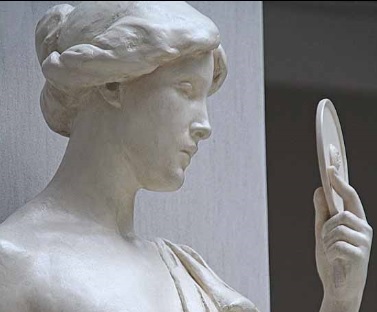
It is perilous indeed to say that sin is to be accepted, but the peril of that hesitation is for our souls’ good. As men and women who have tasted of the fruits of Eden we know that the image of God in us is an immortal one, and as ones who have seen the flaming sword barring the way to the tree of life we know that there is such a thing as eternal ruin. As Rick pointed out, sin itself has progressed from what it was at the dawn of time, that is, choices that could theoretically have been made against the will of God, to a further dimension as we now know it: a state of being existent in rebellion against God. This introduced a problem greater than we could have conceived when we first considered plucking the fruit that was forbidden to us (a situation that might have been anticipated from the very name of the tree given in Genesis). Sin is now no longer mere intellectual aberration that must be corrected, or a nameless enemy that must be done away with, or an abiding foulness that must be simply cleansed away. Transgression now has an aspect, and the face we see, as we gaze into the mirror of the pool of our lives and witness the extent of the havoc we have wreaked, is our own.
Our instincts change abruptly (and conveniently) at this point. From a posture of condemnation and rebuke we turn softly to a desire for forgiveness and restoration, and that without even the blush of shame that should accompany such self-serving desires. It is a noble thing for God to relent in the punishment of man’s sin, as he did in the account of Amos, and after showing all the calamities that should have befallen Jacob’s children he yielded to the prophet’s tears. It is another thing entirely for mortal man, who cannot even sit on the seat of stewardship over Creation for which he was designed, to assume the throne of God Almighty and presume to decide the fate of others. And to this we add the impossibly arrogant dimension of presuming to decide our own fate. Fortunately for all of us it is in the Lord’s courts that the eternal decrees will be made, not ours.
But his decision is perplexing. Recall what God did at the end of the vision. To a people who could not even bear the words Amos brought them, let alone God’s actions themselves, he consented to set beside their wall a plumb line as a standard of righteousness. This was a statement whose impact was far more reproachful than a plague of locusts after the king’s harvest, or a judgment by fire that devoured the deep and was eating up the very land. This was the accounting demanded of a people who were supposed to be God’s own, parties to a covenant that was supposed to be for the salvation of the world. God’s hanging the plumb line was his asking the question of whether the offspring of Abraham really had become as great as the stars in the sky, and whether a sacrifice for sin really had been provided as substitutionary atonement, and whether there really did now exist a Promised Land where man and nature alike worshiped God alone, and whether the Desire of Nations had come to welcome Jew and Gentile alike into communion with him; and the answer to all these questions was no.
But though the answer to the question God asked of Israel is such, still the promises of God are Yea and Amen in Christ. For he is the child of the promise who established faith as the identifying characteristic of the family of God. He is the ram in the thicket, provided so that the life of the firstborn could be spared. He is the one who has gone to prepare a place for us so that where he is we may be also. And it was he who asked of his Father, and the nations were made his heritage, and the ends of the earth his possession.
It is only when we look at the life of obedience he lived to the eternal purposes of the divine counsel, bearing our sins in his body on the tree, that we begin to understand how it is that sin must be accepted. In the sight of the Law Jesus became sin for us, shouldering its terrible burden and draining the cup of wrath to the very dregs. To deny that we are intrinsically sinful would be to deny the import of all the sufferings he endured on earth, and to set at naught the terrible price that was paid for our redemption. It would be to deny that he has called us to participate in a life of toil and sorrows, that he has promised to walk with us through such a life, and that there is any meaning at all to the word sanctification. Not to accept sin is not to accept Christ, for it is only the sick who need a physician.
If the work of Jesus speaks to his passive obedience on our behalf, though, it is the person of Jesus that speaks to his active obedience. It is only when we look at the Resurrection, when he took his seat at the right hand of God and conferred on us the status of fellow-heirs along with him, that we begin to understand how it is that sin must be forbidden. He conquered Death and Hell, and at their gates he set up a Church that would prevail over them as surely as he did. From the power of an indestructible life he is a priest forever after the order of Melchizedek, and he does not set aside the former commandment (even though it be because of its weakness and uselessness) without a new and better covenant to set in its stead. To deny that in him we are vindicated would be to deny the import of all the triumphs he accomplished on earth, and to set at naught all the glorious promises God has made to those who have hungered and thirsted after righteousness since Abel. It would be to deny that he has commanded us to be perfect as his Heavenly Father is perfect, that he sent the Spirit to empower and instruct us in a life of good works to be examined on the Last Day, and that there is any meaning at all to the word justification. Not to forbid sin is not to desire God, for he will surely be shown holy among his people.
It is a mighty doom to which we are called. The stakes are beyond our reckoning, the struggle too sore for us to endure, the intricacies of decision beyond our capacity to unravel. It is not by accident that Shakespeare, probably the greatest of all writers who have ever lived, never rose to treat with religion. You will not find reference to God in his works (other than the occasional profanity) in any form, whether theological, philosophical or poetic. On the subject of life as we experience it he was able to unleash his genius unfailingly, ascending to the heights of beauty and profound reflection as few humanists before or after him. But the most unlearned and unpretentious Christian who bows his head to thank Jesus for his meal has a view of the universe far greater, in his own simple way, than Shakespeare ever dared to open his eyes to. He sees the face of the Lover of his soul, and there is no more sublime vision in all of knowledge; for there is no framework over which it is more difficult to fit the anomalous reality of our lives.
This is the vision we need. We have awoken from the sleep of sin to find that we have left our first love, and that we have done so to couch with false goddesses; that we have done so to exchange the beauty of truth for the horror of a lie. But let us not despair, for the very fact that we have awoken and are able to comprehend our situation speaks to the continuing faithfulness of God. He will not leave us in our state of undoing, but will bring a rescue as much greater than our self-imposed afflictions as grace is greater than law. John describes this same salvation in his magnificent epistle to the Parthian church:
My little children, I am writing these things to you so that you may not sin. But if anyone does sin, we have an advocate with the Father, Jesus Christ the righteous. He is the propitiation for our sins, and not for ours only but also for the sins of the whole world. And by this we know that we have come to know him, if we keep his commandments.
This is the language with which we must acquaint ourselves if we are to crucify the flesh, but at the same time have our body, soul and spirit kept blameless at the coming of our Lord Jesus Christ. These are the two directions in which we must allow ourselves to be continually pulled; this is the salvation we must submit to if, as he assures us, God will indeed not suffer us to live as strengthless shadows among men. And it is only as we walk in this weakness that our strength will be found. Brothers and sisters at Holy Cross, let us together lay hold of this great Gospel.
JV


Author: Jeremy Vogan
My name is Jeremy Vogan. I live in Staunton, VA with my wife and four kids. I love to write, and seek to honestly explore the intellectual and emotional implications of following Jesus as a deeply broken person in a twisted, cruel world that is full of veiled beauty and meaning. Writing is part of how I faithfully look for Jesus Christ to someday make all things new. I'd enjoy hearing your feedback! JV