They talked all night long. And that night everything came together for Arvid: the strange prisoner’s car in an alien country; the rhythmic nighttime clicking of the wheels, which always finds an echo in our hearts; and the girl’s melodic voice, her whispers, her breath reaching his ear – his very ear, yet he couldn’t even look at her… And for the first time, through that invisible (and probably, and of course, necessarily beautiful) girl, he began to see the real Russia, and the voice of Russia told him the truth all night long.
–The Gulag Archipelago, Alexander Solzhenitsyn
I have a very American understanding of value. For me, value is that which contributes to my life’s meaning by adding to my experience in a predictable and controllable way. And the perspective lent by this value is mine to assign wherever I choose. It is an internal measure I may apply to anything in my life: my work, my friendships, my time, my beliefs, my possessions, my even my very self. Value becomes for me a benchmark for existence, a sort of summing up of perceived gain that provides a cost-benefit analysis for the prospect of enjoyment on any level.
As starkly framed as that confession may be, it is not that such an economy is completely without merit. As human beings we learn very early on to weigh the situations we are presented with and choose our path with an eye not only to our own benefit, but also to the expenditure that will be required of us to attain that benefit. Such a test is a very necessary part of life, without which there can be no healthy and mature sense of self-love (see John Piper’s work on Christian Hedonism for expansion on this thought).
And because I am an American, this cost as we have defined it is a puzzling concept to me. We had an excellent example of this in the garden the other day. Our family was all out there digging potatoes, even Beth, although she usually preferred launching and gnawing to the method that Lynn was demonstrating. The other kids weren’t doing that much better. They were slouching over their shovels and flinging teaspoonfuls of dirt at each other, whining about how difficult the digging was, and how hard the ground was, and what a terrible idea this was as a whole, and various other unoriginal complaints. When they did manage to find a potato they would invariably cut it in half, rendering it unusable for winter storage. It was not going well.
So I came up with this great demonstration of the concept of capitalism. I said, “Alright, we are going to have a contest. Whoever digs 50 potatoes will get a PRIZE… but here’s the catch. You can’t nick the potatoes. Any potatoes that get nicked don’t count.” And it worked! Our children turned into efficient, quality-minded, frenzied potato-digging machines. They dug quickly and attentively, turning over every clod to get every potato they could find without harming it. The work was done well with very few damaged products, and everyone finished their task satisfactorily. We went to the dollar store after lunch to get their prizes, and the cycle was completed. My conservative soul exulted in the triumph of risk-and-reward over natural born human indigence of will, and all was well.
That is not how I have found things to be as a Christian following Jesus, however (a reality that may not bode well for my political leanings… J). Living in the Kingdom I enter into a world where bread is bought without money, where living water is to be had for the asking, where by grace I am heir to more riches than my mind could conceive simply because I am part of the family of God. But it is also a world where I may be asked to give up all I have for the privilege of following Christ, where participation in my salvation means knowing real loss and deprivation, where it is not without reason that I am told to count the cost before setting my hand to the plow. It is not a question of using my means to purchase shares in some cosmic venture, assuming a position to reap the rewards or absorb the losses in the sense we are familiar with in our society. It is more a matter of investing myself in a way of life from which I am assured the prospect of both feast and famine, the assurance both that everything is going to go wrong and that it is all going to be all right. Ultimate loss and ultimate gain are juxtaposed in such a way that I cannot escape the nagging conclusion that maybe – just maybe – neither one is really the point.
Such a view of value not only flies in the face of all that I know about profit and loss, but it also challenges any attempt I may make to set up any one component of the system as that single goal which is in itself worth attaining. If I begin to examine the extent of my willingness to bear the cost, forswearing all my worldly possessions and relationships, laying it all as a sacrifice on the altar of obedience and stepping back to bask in the warmth of my forfeit; God says if I do all this without love, I gain nothing. If I commit my energy to the care of the Church, faithfully working in her fields to reap the benefit of what was sown, laboring ceaselessly as one who must give an account of the souls put under my charge; Jesus gently tells me that there is one flock, and one Shepherd, and from my own unwilling lips comes the last confession of the greatest saints of all time: I am an unworthy servant, I have only done that which was my duty. There is no aspect of the Christian life to which I can turn in the pursuit of accomplishment that does not simultaneously require all the dedication I can muster while making it abundantly obvious that the eternal riches bestowed on me have nothing to do with that dedication.
But there is a dedication with which it had everything to do. There is a living Sacrifice which was offered up with no thought of recompense, an eternal covenant made with only one party that walked between the animals hewn asunder. This was done as a sign of the curse that should fall on the covenant-breaker, yet God knew when he did it that this curse would fall on his Son, not on Abram’s. The dreadful and great darkness that fell on Abram during this ritual was not without portent. There was a night coming when the unbearable weight of the iniquity of the world would fall on a man, a night when the heavens would be clothed with blackness and sackcloth made their covering, and Jesus saw that night coming through the darkling corridors of time: terrifying, senseless, menacing, and manifestly unfair. It was toward this doom that he set his face like a flint, and he knew that he would not be put to shame, because he did it for the sake of love.
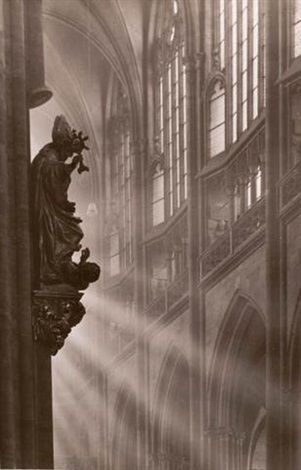
Love scoffs at the idea of reward. The lover walks past all the greatest treasures this world has to offer, and when the gauntlet of temptation grows long he stops walking only to run. Love can see only his beloved, and when they cannot be together he perceives her all the more clearly. He delights, even exults, to give things up for the good of his beloved, and the more costly the possession the greater the pleasure. But he keeps no record of his renunciations, as if he would present a bill for services rendered when their troth is finally plighted. The lover’s reward is to see that face that means more to him than anything else in the world. Everything he does and everything he uses to that end is like the tools and scaffolding and shoring that is torn away when the cathedral is finally finished: eminently useful in its time, but quickly fading away like mist in the glory of the dawning sun.
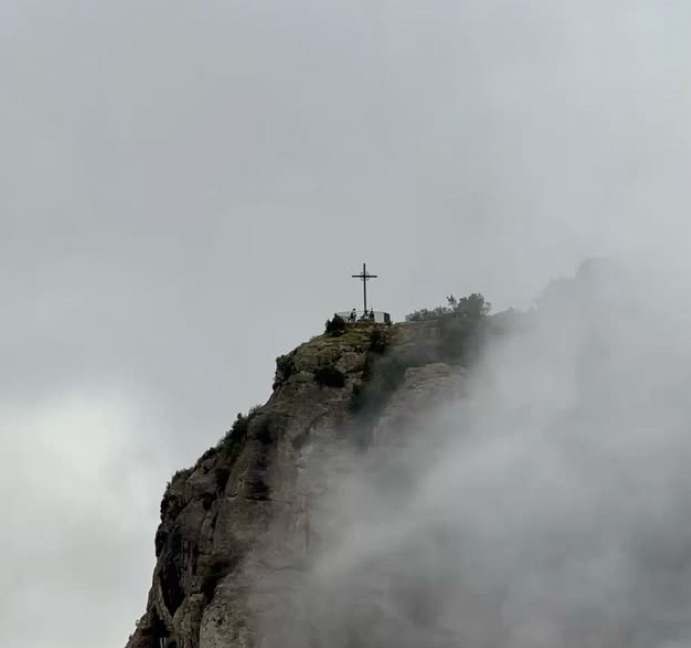
This is the cost God requires of us. No return is proffered to us for our labors, just as no payment was required of us for inclusion in the peerage of Heaven. He asks only that we live as Jesus did: subjecting our will to the Father’s, setting the wellbeing of others above our own, taking up our cross daily, and laying down our lives for the flourishing of the Kingdom. Hearing the Come, follow me of Jesus we suddenly realize that this is as much an invitation to share in his inheritance as it is a command to go out and labor for him. If Jesus has told us earthly things and we do not believe, how can we believe if he tells us heavenly things? But the truth we will be told by that invisible voice, beautiful as it cannot but be, is the story of our Motherland beckoning her prodigal children into her arms again. It is Rachel rejoicing for her children, because they have come back from the land of the enemy. For God will satisfy the weary soul, and every languishing soul he will replenish.

Author: Jeremy Vogan
My name is Jeremy Vogan. I live in Staunton, VA with my wife and four kids. I love to write, and seek to honestly explore the intellectual and emotional implications of following Jesus as a deeply broken person in a twisted, cruel world that is full of veiled beauty and meaning. Writing is part of how I faithfully look for Jesus Christ to someday make all things new. I'd enjoy hearing your feedback! JV




Leave a Reply