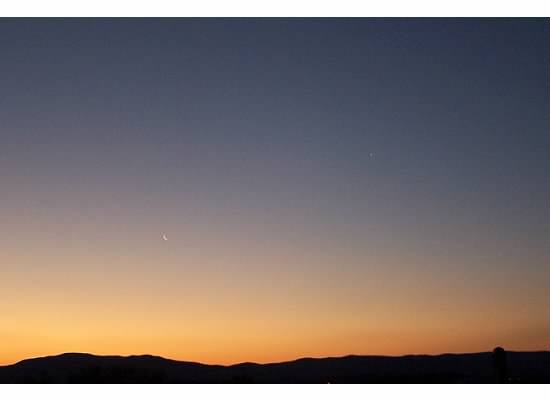

“Why did I dream that sleep o’er-power’d me
In midst of all this heaven?
Why not see, Far off, the shadows of his pinions dark,
And stare them from me? But no, like a spark
That needs must die, although its little beam
Reflects upon a diamond, my sweet dream
Fell into nothing…”
Endymion, John Keats
Last time we probed the inability of hope to deliver for us. It took the brutal vision of death to help us form the image of what joy may be found in placing that hope in a Person instead of in Places or Things, or even Ourselves; yet we still concluded that hope itself is not reducible to meaning. There are levels of import beneath it that are yet to be plumbed.
One of those levels is certainty. In worship at Holy Cross today we talked about our desire to know things for sure, to take hold of circumstances by being able to identify exactly what caused them and therefore predict what their outcome would be.
This is at its essence a desire we can all relate to. From what does the witch-doctor derive his influence, as the shuddering rows of fearful worshipers bend and sway to his murmuring, if not from his uncanny ability to point out the culprit responsible for the crops failing that year (and dictate their demise)? Why does the business consultant command the highest compensation and universal regard, if not because she can trace the strategic fault in a corporation’s vision back to its unlikely source, and proceed to prescribe the innovative solution that will send its stock price back up to record levels? And is it not a truly trusted friend who can come alongside us and speak truth into our lives about points we would otherwise have been blind to?
It is very human, then, to want to know. But no less true than that is the statement that it is only human to want to know. The divine nature alone has been able to say with contentment:
No one knows, not even the angels in Heaven, nor the Son, but only the Father.
Somehow we as a race have always entertained the lurking suspicion that there is more out there, that we are perhaps missing out on something. Even in our perfect state, stewards of Creation, mouthpieces of God Almighty, naked and unashamed, having had the whole world opened to us in what must have been the most exciting and inspiring vista ever entertained by human eyes and minds, we still could not but turn to regard the tree in the back corner of the garden, wondering why God forbade it and what greater glory must therefore be available through that dark portal.
If such foolishness were not so ruinous, I can imagine God being unable not to laugh at it. How could we so greatly underestimate him? Of course there is more out there! One has only to look out at the stars and try to feebly peer through the mighty concourse of beauty and immensity, continuing off out of sight and thought unimaginable, to sense that the God who made all this must be as much higher than we as the heavens are higher than the earth. One has only to examine the intricacies of the smallest cell, wobbling its way through its inscrutable microcosm to accomplish the ultimate synchronization of all things living and sentient, to sense that there is more to this life than we will ever uncover in a thousand lifetimes of discovery. That there is more to be known is without question. That such knowing will be worth the sacrifice required is the point at which science becomes philosophy, and that we are willing to betray the Lover of our souls for such knowing is the practical theology in which we all engage when we consider the benefits of the forbidden fruit.
And what have those benefits gained us? Instead of living in a world where history lives and breathes through the ongoing relationship of parents with children, and the outpouring of God’s blessing on us to be fruitful and multiply would fill the earth with new generation after new generation, and the continual outworking of our callings would propel us to explore new frontiers and quell chaos and create safe havens and welcome each other into joyous unity; instead of all these things, we have a gray and withered chronicle of consistent human failure that reminds us of our common destiny, and the ruinous aspect of war and disease and famine hovering over our civilizations, and the persistent disappointment of men and women who are not only unwilling but unable to image God in the ways he created them to.
Certainty for the Christian no longer holds the same allure. We have seen all it has to offer: the false hopes that are dashed by the unfeeling grind of daily life, the predictions of what a righteous life will gain for us that are so cruelly reversed, the removal of our focus off of our calling to love God and neighbor and the placing of it squarely on ourselves. We admit with Pascal that the greatest pain of purgatory is the uncertainty of the judgment, and we wish that God would just make up his mind one way or the other. If things are going to go badly it would be better to know it now and be resigned to it, and if things are going to go well it will take an epiphany to convince us of it.
But God does not answer with either of these options. He responds, as Rick showed us today, with the Person of Jesus Christ. Jesus the Man of Sorrows, who will someday wipe away all tears. Jesus the Bread of Life, who denied himself and offers his own flesh for our sustenance. Jesus the Bright and Morning Star who rises in our hearts, having endured the dark night of the cross and scorned its shame. He it is who assures us that although the spark of certainty in our minds is an illusion that needs must die, if we know Christ, we will surely live forever.
JV

Author: Jeremy Vogan
My name is Jeremy Vogan. I live in Staunton, VA with my wife and four kids. I love to write, and seek to honestly explore the intellectual and emotional implications of following Jesus as a deeply broken person in a twisted, cruel world that is full of veiled beauty and meaning. Writing is part of how I faithfully look for Jesus Christ to someday make all things new. I'd enjoy hearing your feedback! JV



Leave a Reply