
Choices and the Christian Life
Have you ever found yourself at a crossroads, with only two options available to you? You can’t go back, and there is only a turn to the right, or a turn to the left. Nothing more.
CS Lewis writes about this in one of his most beloved books, The Magician’s Nephew. Digory and Polly are in the Hall of Images in the ruined world of Charn. They come upon a little bell with a hammer by it, and written underneath is this inscription:
Make your choice, adventurous Stranger;
Strike the bell and bide the danger,
Or wonder, till it drives you mad,
What would have followed if you had.
Polly reacts instantly with a scoff, as she has no intention whatsoever of striking any bell, let alone biding any danger. But the warning has awakened something within Digory, something that longs for that danger more than any joy of avoiding it could ever satisfy him (or so at the time he thinks). For him it is not really even two options at all, but only one. So against Polly’s wishes he grabs her wrist, leans forward, and strikes the bell. And their adventure has begun.
Was it worth it, then? That might be a question better asked of him later in his life. In the moment he thinks nothing of his sin against her, and even throughout the course of the story Lewis knows better than to develop such a young character too deeply. But when we have a few more years we reflect back on the choices we have made, and more often than not it seems that regret colors our memories far more darkly than we wish it did. The callousness with which we have treated people, the rank disobedience against God we have indulged in, the open rebellion we have joined, the secret impurities we have allowed into our souls: All these rise up to testify against us in our twilight years, and we have little defense against them.
For it is important to realize the reason why we choose wrongly. It is not because of our environment; Adam and Eve fell in the perfect Garden of Eden. It is not because others have prevailed against us; every soul chooses in the sight of God, and will give account to Him alone at the end of our lives. It is not because we were too weak, or too unprepared, or too ignorant. We sin simply because we want to.
James makes this point unequivocally in the first chapter of his book, verses 13-15:
Let no one say when he is tempted, “I am being tempted by God,” for God cannot be tempted with evil, and he himself tempts no one. But each person is tempted when he is lured and enticed by his own desire. Then desire when it has conceived gives birth to sin, and sin when it is fully grown brings forth death.
Our desires come from within. The opportunities we are faced with merely uncover what those desires are. Deep in our hearts we all know this.
So, was it wrong for Digory to ring the bell? None of that book would have happened if he had not, right? So it was okay, right?
Nope. As Christians we know that God is sovereign over all of life – including our wrong decisions. “What you meant for evil, God meant for good,” as Joseph instructed his brothers after their sin had been uncovered. Just because He brings beauty and life out of our failures does not make them successes for us. It just means He is showing us grace so we can learn from them, and next time the beauty and life will appear growing as the fruit on the branches of our spiritual tree, and not have to be plucked out of the ashes of the smoking ruin we’ve made of a situation.
I was driving down the road in the little town where I work one day some years ago, and saw a friend of mine sitting at the bus stop. I stopped to say hello and we visited briefly. Then just as I was getting ready to drive off, she said, “So I heard you’re starting an MBA program. Does that mean you’ll be stepping down as an elder of the church so you’ll have enough time for your family?”
All my life I have struggled with a pretty dern good opinion of myself and of my abilities. No matter what comes along, I can handle it. Too hard for most people? No worries, it’s all good here. So I laughed and said, “No, it’ll be fine.”
My friend has always had a double portion of the Spirit, more than most. She just made a face and said, “Well – I hope that works out for you. Will pray for you guys.”
A few years later when my chronic overcommitment, spiritual stupidity, and just plain arrogance had caught up with me, I made the decision to step down as an elder of the church. It was not in the best of situations and I had (and still have) deep regrets about it. I wished I could have gone back to that conversation by the side of the road and said, “Hmm, maybe I should think about that. Thank you for saying something.”
The Lord has since seen fit, for reasons only He knows, to restore me to a shepherding role serving as an elder in His Church. But I entered into it with all the humility I could grab hold of, spending time before Him in prayer about it, evaluating all the tradeoffs that had to take place, and listening to all the honest input my wife and others who speak into my life have to give. He may ask me to lay the office down again someday, and if He does, I will do it with a glad heart. To serve Jesus Christ is an honor that transcends any title and office, and if there comes a Day when He says to me, “Well done, good and faithful servant,” there will be nothing left in this world that I want.
So the question goes back again, inescapably, to what it is we really want most. If what we want is people’s acclaim and approval, we will go for it as soon as we have the chance. If what we want is money, we’ll take the big raise and overlook the fraud. If what we want is danger and adventure, we’ll twist our friend’s wrist and ring the bell every time. But if what we want is God, we will stop and think first about some of these things whenever we make an important choice:
“Does the Bible have anything specifically to say about this choice? In other words, is there a clear moral/ethical choice to be made here?”
“Will I dishonor God by turning one direction instead of another?”
“Will I hurt someone by turning one direction instead of another?”
“Have I prayed about this enough?”
“Is it okay for me to do what I want in this situation?” (often the answer is yes; but not always. The Spirit will show you if you ask Him)
“Will I be okay if God does not end up giving me the thing I choose?” (an excellent Gospel heart diagnostic)
“What good counsel have I sought in making this choice?”
If you make your choice in this way, you will have kept the first two commandments. You will have loved the Lord your God with all your heart and with all your soul and with all your mind, and you will have loved your neighbor as yourself. But as a crowning triumph, you will realize that Jesus kept this Law as He did all the others on Your behalf, and He did it so that you could obey God in the freedom of love and no longer out of the slavery of legalistic obedience. As St. Augustine once said in one of my very favorite quotes:
“Love God, and do what you want.”
There is no danger in love like this, for it is the fulfillment of the Law. Let us seek first to obey God in our choices and discover the greatest joy we have ever known.
Jeremy Vogan
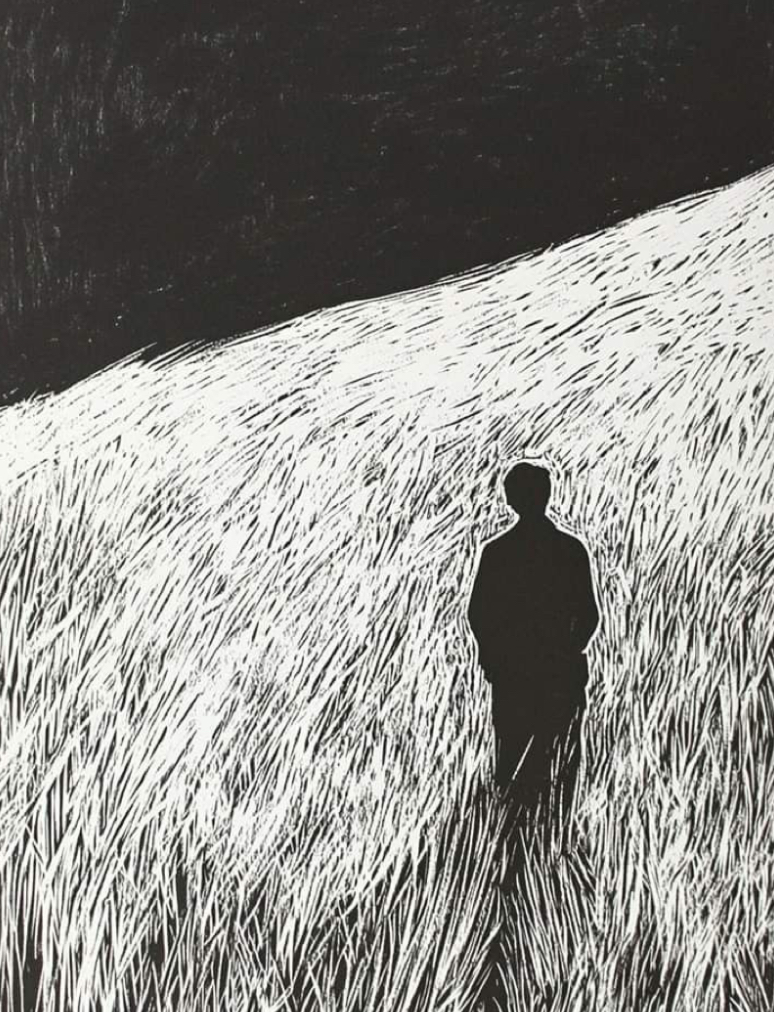
Photo Credit: David Woodhead, Sandon & Rosebury, 1978

Author: Jeremy Vogan
My name is Jeremy Vogan. I live in Staunton, VA with my wife and four kids. I love to write, and seek to honestly explore the intellectual and emotional implications of following Jesus as a deeply broken person in a twisted, cruel world that is full of veiled beauty and meaning. Writing is part of how I faithfully look for Jesus Christ to someday make all things new. I'd enjoy hearing your feedback! JV




Leave a Reply