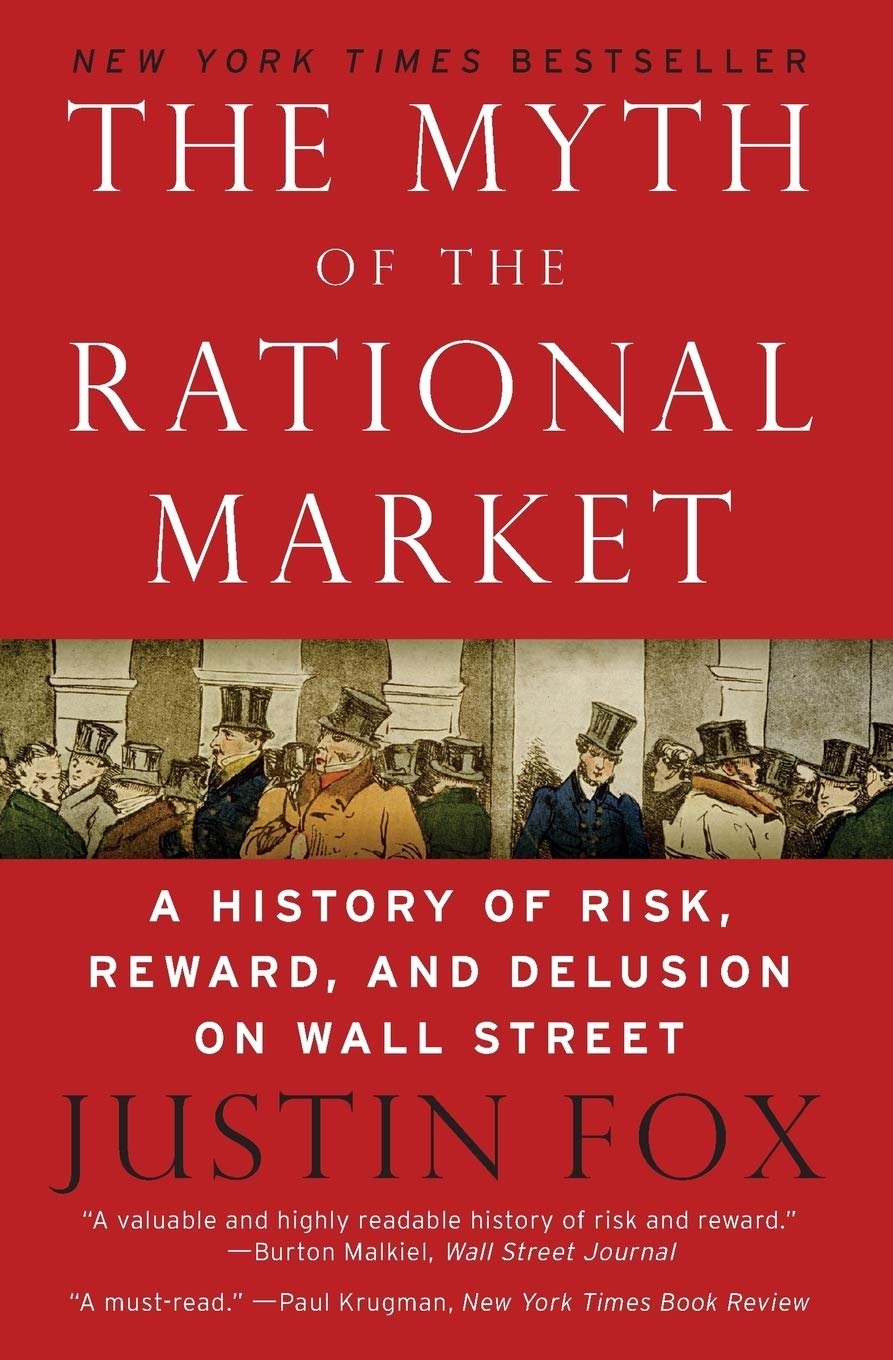
Is the financial market truly efficient, or is it simply behavioral? When stocks that seem overpriced stay that way is the judgment of the pit to be trusted? When a CEO makes a killing while his company’s stocks take a battering should investors be concerned? And given our industry’s ill-fated success at handily transforming poisonous personal loans with the use of tranches into triple-A CDOs, have we really learned anything at all since the collapse of the Dutch tulip bubble in the 1630s?
These questions and many more are examined in Justin Fox’s urbane, candid history of men and money. Fox navigates the troubled waters of the Street and the Academy with skill, giving credit where it is due but not hesitating to point out the Emperor’s knickers around his royal ankles. The only disappointment to me was the discovery that there is no method of stock valuation for the side of the argument which maintains the irregularity of the market; there is no Black&Scholes for the unbeliever. But maybe that fact is indicative of the truth that, in the end, you really do have to choose between precise ambiguity and vague truth.
And this book whispers an unsettling memento mori into the ear of the aspiring business leader: It doesn’t matter which lens you choose, because in the end the view is the same through both of them…
Great read, drills down relentlessly into the annals of time and pressure and personalities and opportunities and Other People’s Money, to come up with timeless observations about finance and philosophy.
JV

Author: Jeremy Vogan
My name is Jeremy Vogan. I live in Staunton, VA with my wife and four kids. I love to write, and seek to honestly explore the intellectual and emotional implications of following Jesus as a deeply broken person in a twisted, cruel world that is full of veiled beauty and meaning. Writing is part of how I faithfully look for Jesus Christ to someday make all things new. I'd enjoy hearing your feedback! JV







Leave a Reply